SHUSSAI

SHUSSAI

  • Izumo, SHIMANE

Biography

1947 Founded by five young men with the help of two supporters.
1949 Joined the mingei movement under Shigeru Kanazu’s guidance and adopted the name Shussai Kiln after the locality.
1950 Began making everyday tableware under Kanjiro Kawai’s guidance. Studied with the Buddhist priest Kugai Yamamoto and found the group’s guiding principles in Buddhism.
1951 Visited by Soetsu Yanagi.
1952 Received instruction from Shoji Hamada and studied at his workshop in Mashiko, as well as in Tamba and Gojozaka.
Studied with Shoya Yoshida and joined the Tottori Mingei community.
1953 Received instruction from Bernard Leach during his stay in Fujina.
1955 Moved the workshop to Naka-Shussai and formed the Shussai Kiln business cooperative.
1956 First selected for the Japan Folk Crafts Museum Exhibition; received numerous awards thereafter.
1959 A set of large and small brush-slip bowls with wave patterns received the top award at the Japan Folk Crafts Exhibition marking the Japan Folk Crafts Museum in Osaka’s tenth anniversary.
1961 Visited by Bernard Leach.
1964 Visited by Bernard Leach and received his instruction.
1966 Flooding prompted a move to the present site.
1974 The workshop was destroyed by fire and rebuilt with widespread support.
1980 Acquired and relocated two former Tottori Folk Crafts Museum buildings as the Shoya Yoshida Memorial Hall and Shussai Kiln Training Hall.
1983 A set of black-glazed oval bowls received the Japan Folk Crafts Association Award at the Japan Folk Crafts Museum Exhibition.
1989 A set of cobalt-glazed bowls with iron-glazed rims received an Outstanding Work Award at the 10th Japan Ceramic Art Exhibition.
1993 The Crafts Gallery of the National Museum of Modern Art, Tokyo, held Contemporary Potters: Shussai Kiln of San’in.
A straight-sided bowl with white slip received the Japan Folk Crafts Association Award at the Japan Folk Crafts Museum Exhibition.
1996 Designated a Shimane Prefecture Furusato Traditional Craft.
1998 The Hirata City Former Honjin Memorial Museum held Local Ceramics II: Shussai Kiln.
1999 A set of straight-sided shallow bowls with namako glaze received an Outstanding Work Award at the 15th Japan Ceramic Art Exhibition.
2002 Received the 5th Kurashiki Museum of Folkcraft Award.
2004 Reissued Sori Yanagi’s black teapot and began production of the Sori Yanagi-directed Shussai Kiln series.
2009 A set of deep cobalt-glazed bowls with iron glaze on the exterior received a Special Award at the 20th Japan Ceramic Art Exhibition.
2013 Certified as an Izumo Brand product.
2016 Reorganised as Shussai Kiln Co., Ltd.
2017 An amber-glazed donabe received a Special Award at the 24th Japan Ceramic Art Exhibition.

About twelve kilometres east of Izumo Taisha, beside the Hii River that flows into Lake Shinji between Matsue and Izumo, five childhood friends founded Shussai Kiln in the autumn of 1947. Inspired by William Morris and through encounters with Kanjiro Kawai, Shoji Hamada, Bernard Leach, Soetsu Yanagi and Sori Yanagi, they have continued making simple, wholesome and beautiful mingei tableware.

Shussai has a six-chamber climbing kiln and two kerosene-fired kilns, and uses local clays from Shussai Himuro, Kamo Mishiro and Otsu Nishidani in Izumo. Everything in the workshop has its proper place, from tools and clay to the potters’ everyday belongings. It feels almost like the orderly residence of a small community of workers.

Unusually among mingei kilns, Shussai is a large workshop. Experienced potters and many younger makers work quietly side by side from morning until dusk. It is a very different scene from the many kilns struggling to find successors.

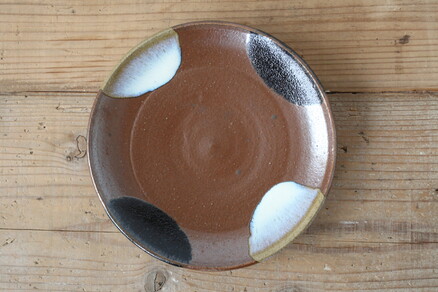
In 2004, production began on the Shussai Kiln series directed by Sori Yanagi, adding another dimension to a workshop whose pottery has always had a modern character. Some mingei kilns seek closeness to nature through work that recalls earth before it becomes clay. Shussai’s unadorned pottery seems to us more distinctly shaped from clay. Although Japanese, it sometimes has the bearing of Western tableware; the vivid cobalt known as Shussai blue can even evoke Europe or America. The beautiful flat plates, moulded rather than wheel-thrown and reminiscent of industrial design, are another distinctive feature rarely seen in Japanese tableware.

The Mujishokan showroom opened in 1998 and welcomes many visitors. Set in peaceful countryside, Shussai is well worth a visit when you are nearby.

Photo gallery


Gift Wrapping

We have a gift wrapping service.

Terms & Conditions

Newsletter

Sign up for our newsletter:

Cart

You have no items in your shopping cart.