SHIWACHI

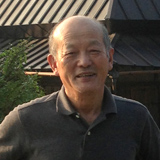
In 1979, Sato realised his long-held wish to build a Kyoto-style climbing kiln in Miyoshi, Hiroshima, where relatives of the wife he had met during his apprenticeship at Kurashiki Minato Kiln lived. Access has improved a little in recent years, but he continues making pottery amid Miyoshi’s fields and farmland.

We first encountered Sato’s work from Shiwachi Kiln at Toworu, a mingei shop in Kurashiki. We bought a rice bowl whose traditional shape and beautifully honest transition from foot to bowl caught our eye. It was also at Toworu that we met the widow of his teacher, the late Haruki Okishio of Kurashiki Minato Kiln, and unexpectedly received some of Okishio’s work from her. Born in Kurashiki, Okishio devoted many years to making everyday utensils. His sincere craftsmanship earned a special award marking the Kurashiki Museum of Folkcraft’s fiftieth anniversary. In the June 1958 issue of Mingei, Soetsu Yanagi praised his work as everyday utensils with integrity. Kichinosuke Tonomura, the museum’s first director, likewise valued his unwavering commitment to the beauty of useful things. The museum later published The Work of Haruki Okishio, in which he said that beginning as the young man who makes bowls and ending as the old man who makes bowls would be enough. Entirely devoted to this vocation, he was the teacher under whom Toshiro Sato of Shiwachi Kiln trained for fourteen years.

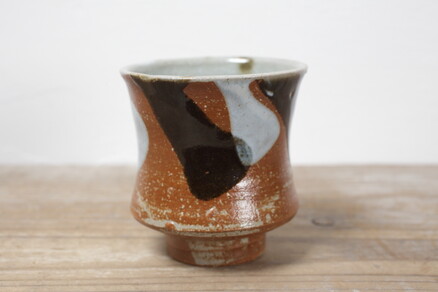
Sato liked this place and wanted to honour its name, Shiwachi, whose characters evoke an aspiration towards harmony, so he named his kiln after it. He aims to make pottery anyone can use every day: not bold patterns or colours, but quiet companions to daily life.
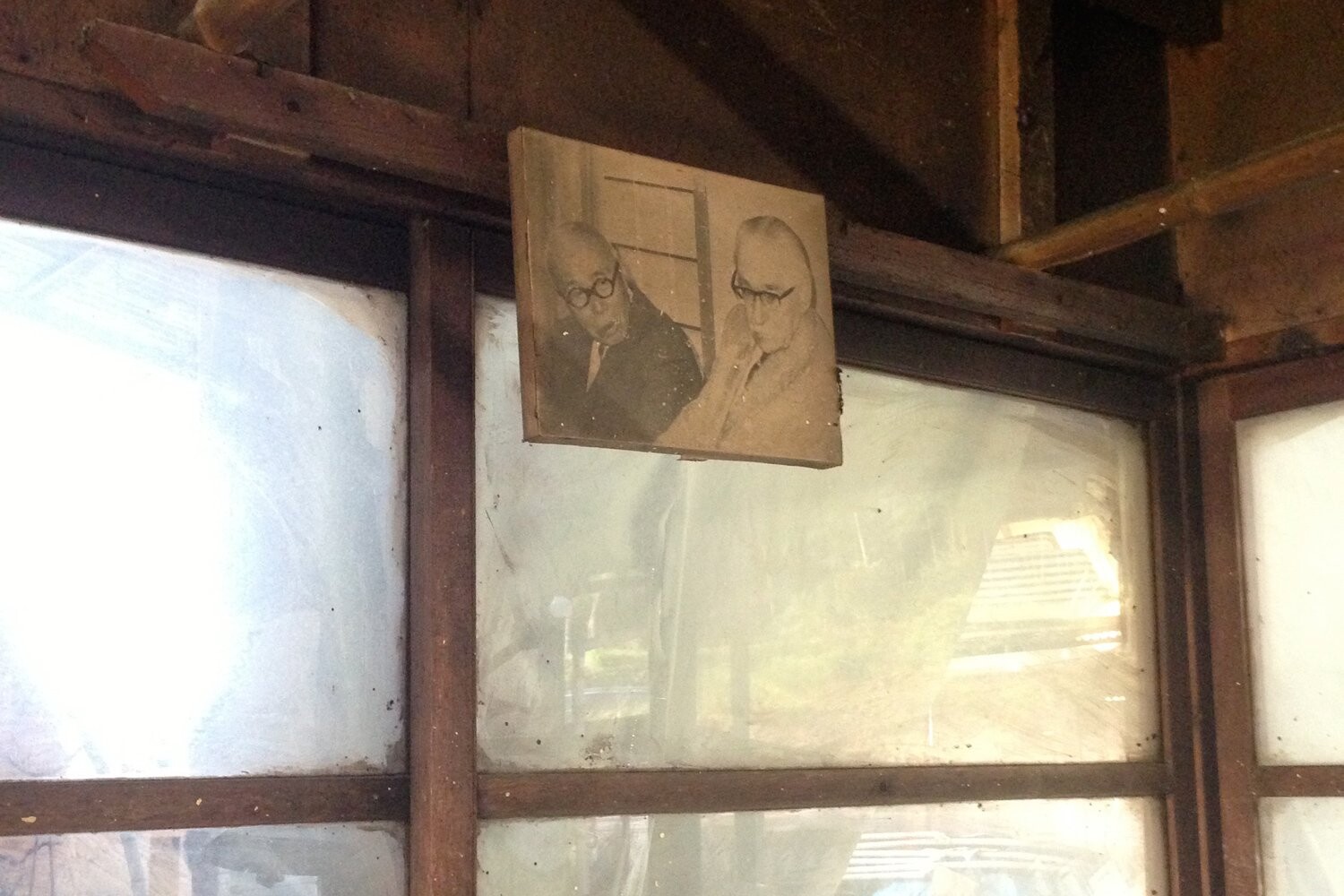
This photograph, casually pinned up at the kiln, was taken by Sato when Shoji Hamada and Bernard Leach visited Kurashiki.
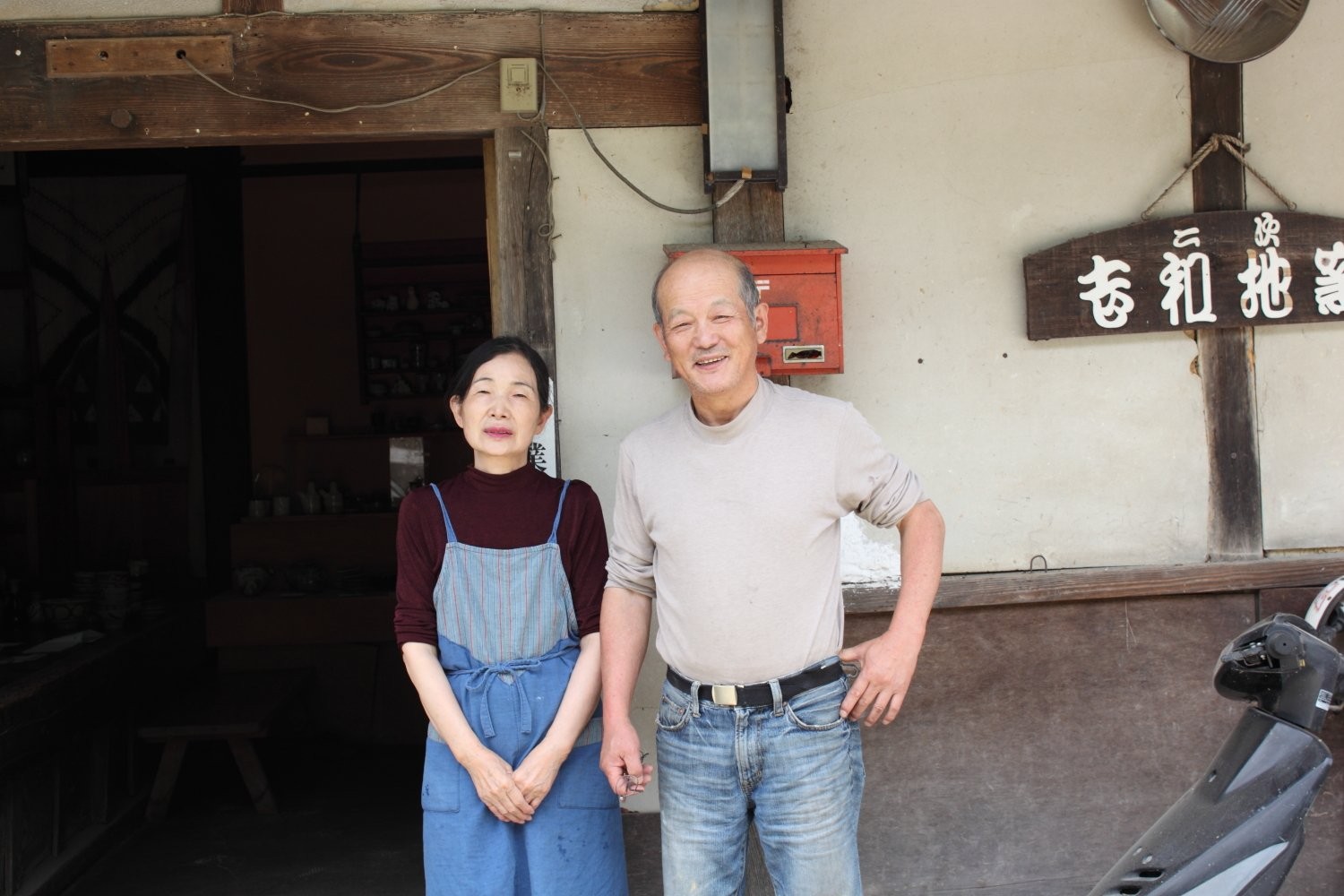
Mr and Mrs Sato. Even before they met, she loved pottery and used part of her salary to buy pieces she liked. By chance, one of them had been made by Sato.
As we seek his advice on many aspects of the craft, we hope to introduce pottery in which his long years of repeated practice are clearly visible.
Items
Terms & Conditions
Newsletter
Sign up for our newsletter:
Biography
At seventeen, left his hometown of Hirosaki, Aomori, and spent four years as an apprentice at Tansō Kiln in Tamba-Tachikui, Hyogo.
Then trained for fourteen years under Haruki Okishio at Kurashiki Minato Kiln in Okayama.
Established his own workshop and built a Kyoto-style climbing kiln in Shiwachi, Miyoshi, Hiroshima, in 1979.
Continues making everyday tableware with local materials.